

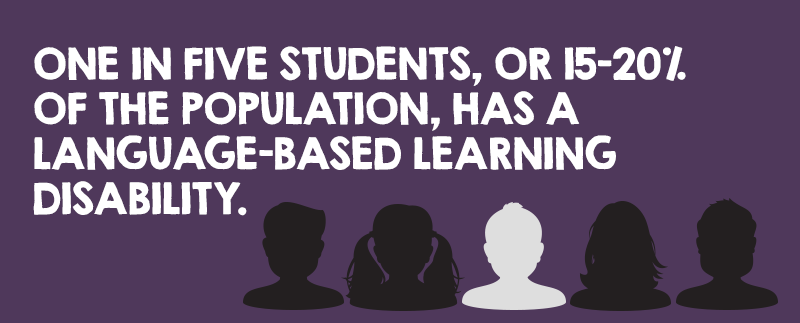
3. Dyslexia is more common than many people think. The International Dyslexia Association estimates that as many as 15 to 20 percent of people have some symptoms of dyslexia, such as trouble with reading, spelling and writing, or mixing up similar words. It affects people from all types of backgrounds too. Of the 13 or 14 percent of school-age children who have a condition that qualifies them for special education services, 7 percent are diagnosed with a learning disability. And 85 percent of those children have a primary learning disability in reading and language processing. “Some people worry that dyslexia is a problem of only the privileged,” says Nelson, adding, “It’s true that dyslexia is probably under-identified in children with lower socioeconomic status because they face so many other academic challenges that the specific reading deficit gets lost. Plus it may be more difficult to identify dyslexia among children when English isn’t their first language since most of our tools are designed to detect language and literacy problems among children who have been learning English since they were born.” Nelson recommends providing explicit instruction in sound-letter associations to all students (e.g., teach them to identifying word parts like -ed and -ing) and in reading, decoding and spelling. She says that all children can benefit from this type of instruction, especially in the early grades, and that those children, including those from diverse backgrounds, who struggle to learn despite this instruction may have dyslexia.